Read, write, speak, and understand.
Phonics, guided reading, handwriting, comprehension, vocabulary, and writing practice are taught with care.
KFS combines CAPS-aligned learning with small-class teaching, close support, and a broader rhythm that includes technology, life skills, movement, creative arts, and Christian values.

The curriculum is designed to grow capable learners and confident children, not only children who can complete tasks.
Phonics, guided reading, handwriting, comprehension, vocabulary, and writing practice are taught with care.
Children work from concrete experiences to stronger problem solving, fluency, and mathematical thinking.
Science, social understanding, communication, wellbeing, and everyday responsibility are part of learning.
Knowledge Network supports age-appropriate computer skills, digital familiarity, and introductory coding.
These visual overviews show how the school talks about literacy, maths, discovery, life skills, and creative digital learning as part of one whole foundation phase experience.
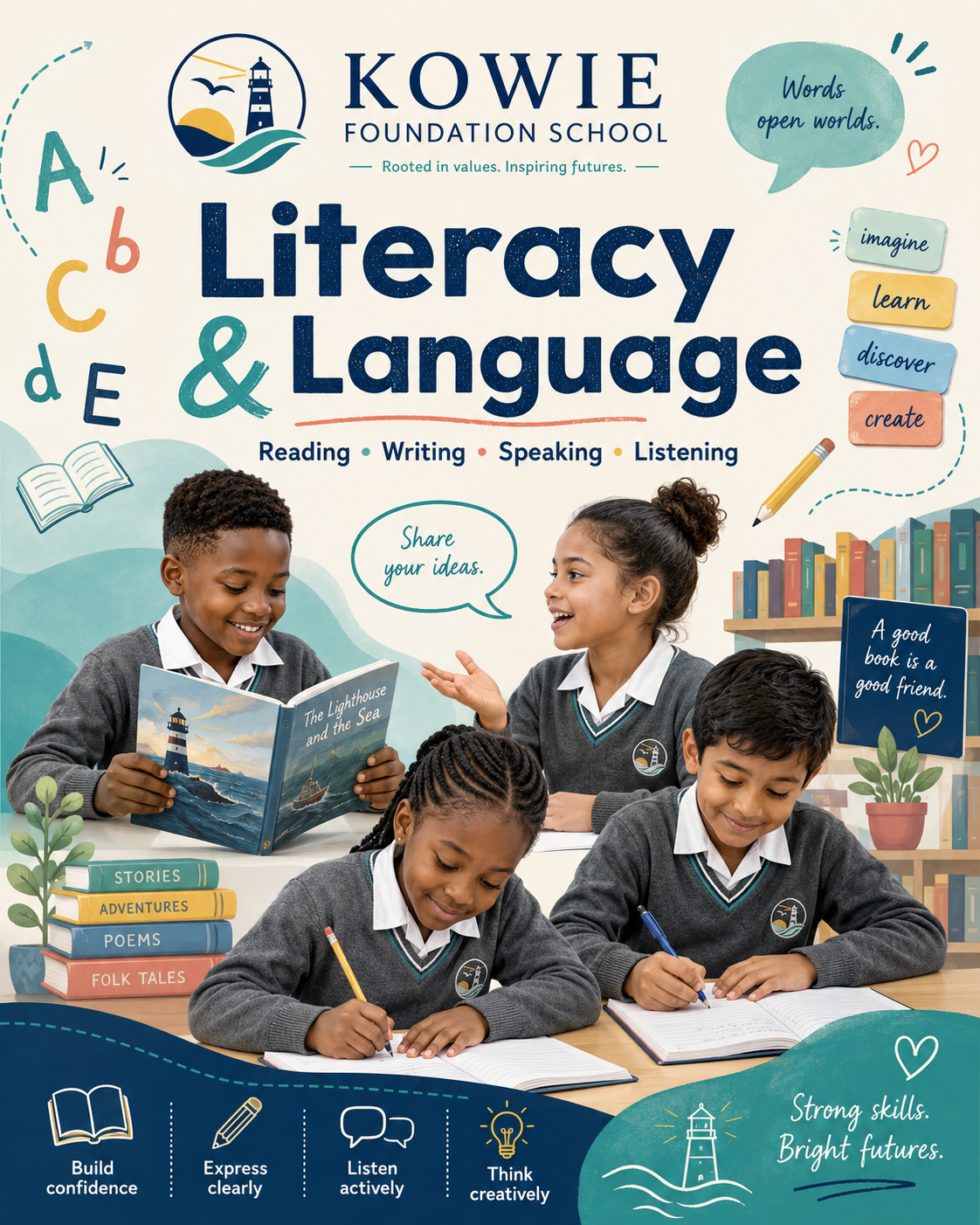
Reading, writing, speaking, and listening are developed together through guided practice and expression.

Mathematics is taught through number sense, shapes, measurement, and confident problem solving.
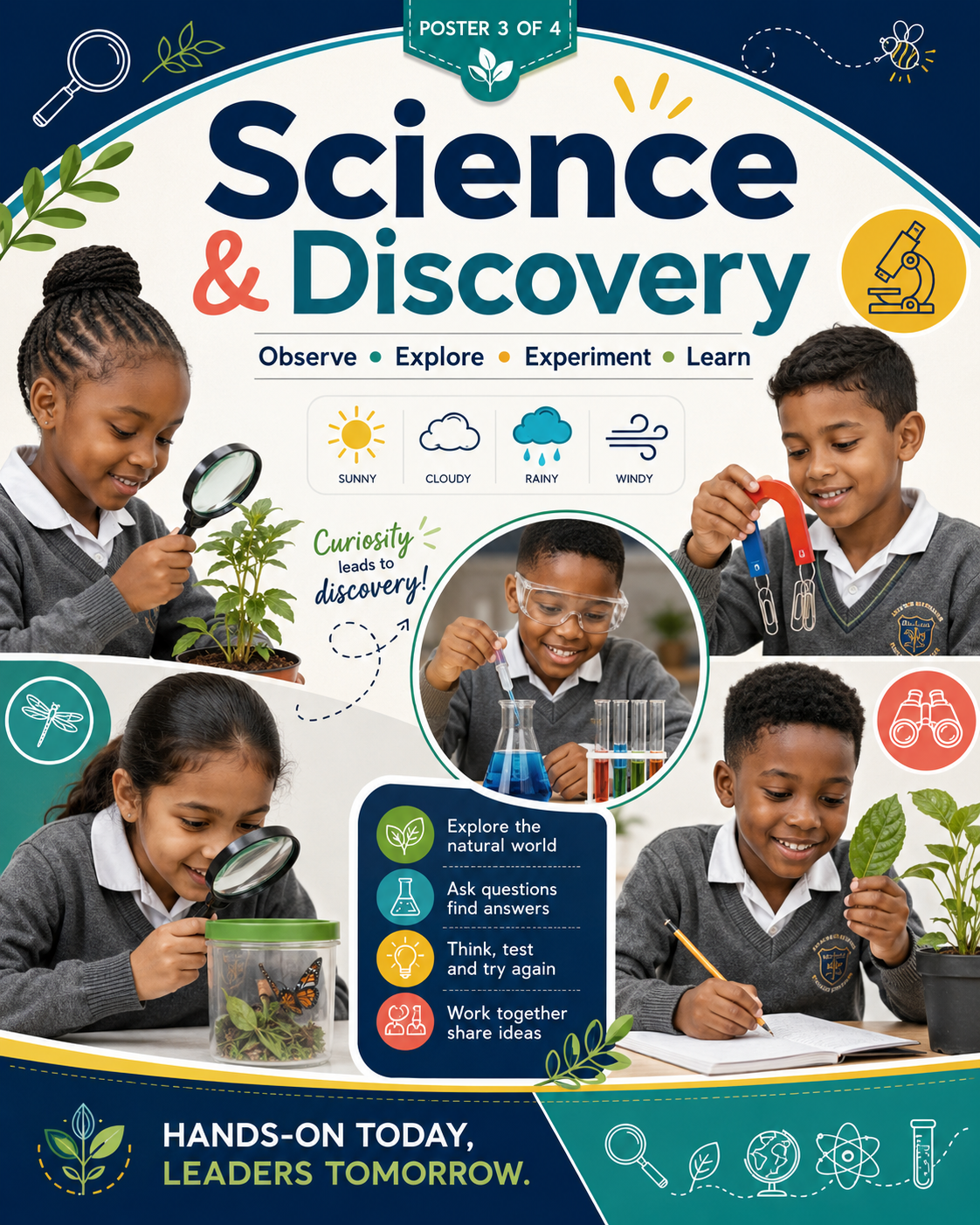
Science and discovery invite children to observe carefully, ask questions, and explore how things work.

Life skills and social learning help children grow in awareness, responsibility, kindness, and confidence.
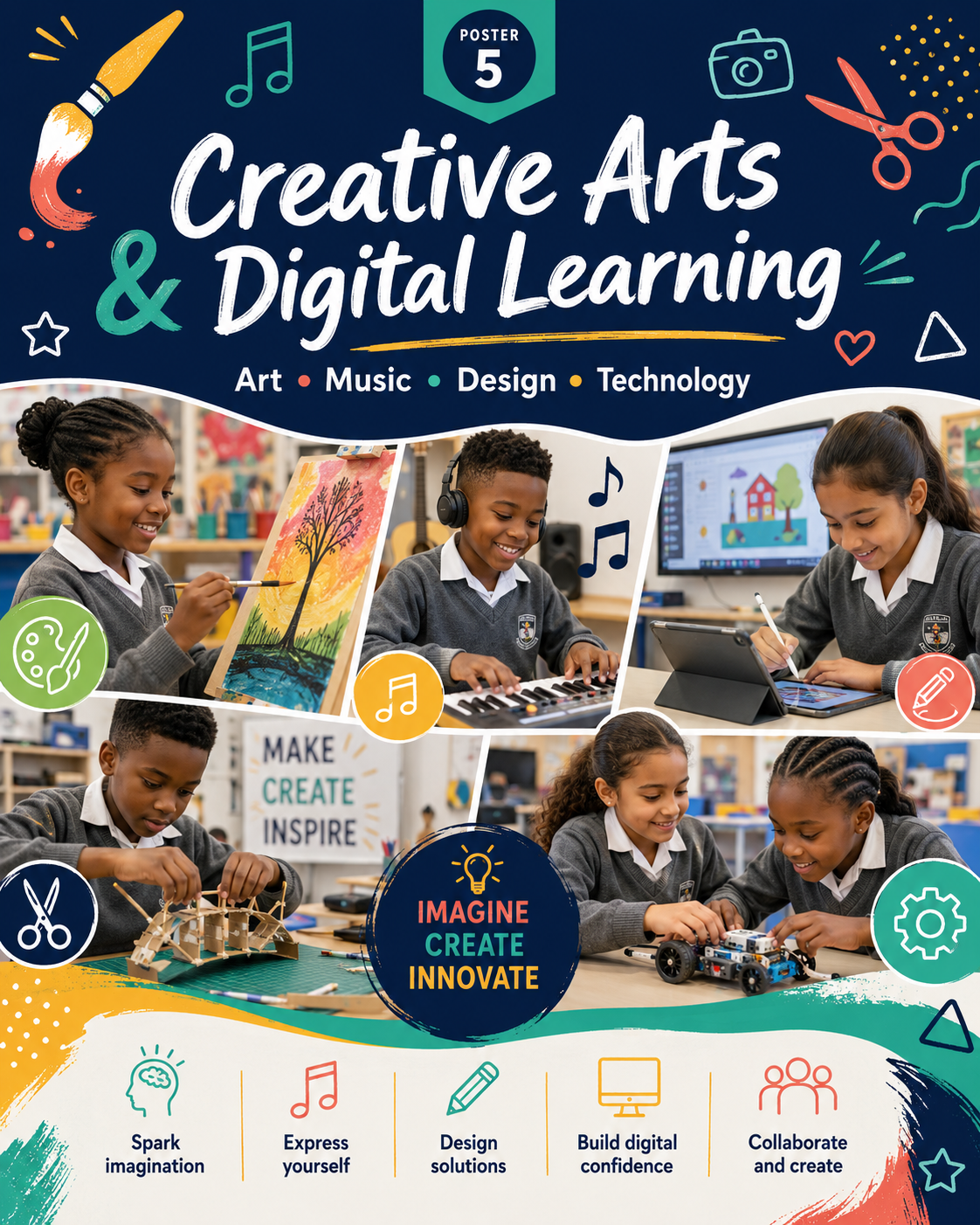
Creative arts and technology make room for imagination, expression, and early digital fluency.
Small classes make it easier for teachers to catch uncertainty quickly, reinforce key concepts, and stretch children who are ready for more. Families receive practical feedback that helps support learning at home too.
Families are kept informed about school life, learner progress, events, and practical next steps. The goal is to make it easy for home and school to work together.
Children are supported warmly, but expectations still matter. KFS aims to grow capable learners who know how to participate, persevere, and take pride in their work.
Start with the enquiry form, then contact the school to set up a visit or ask any practical questions.
Touring the school while classes are running is the best way to understand the atmosphere, routines, and teaching style.